In instances where electrical and industrial systems work at high temperatures, the insulation that is used to cover wires and components could mean the difference between long-term operation and sudden failure.In instances where electrical and industrial systems work at high temperatures, the insulation that is used to cover wires and components could mean the difference between long-term operation and sudden failure. In a variety of different materials used for insulating systems from high temperatures, fiberglass has come to be considered one of the best options available. Fiberglass products can offer better performance than many other options where the main requirement is heat resistance.
In this blog post, we will look at why fiberglass is a good material for high-temperature insulations, where it is used, and what products such as fiberglass insulation sleeves or high-temperature insulation tape are capable of.
What Makes Fiberglass a High-TemperaturePowerhouse?
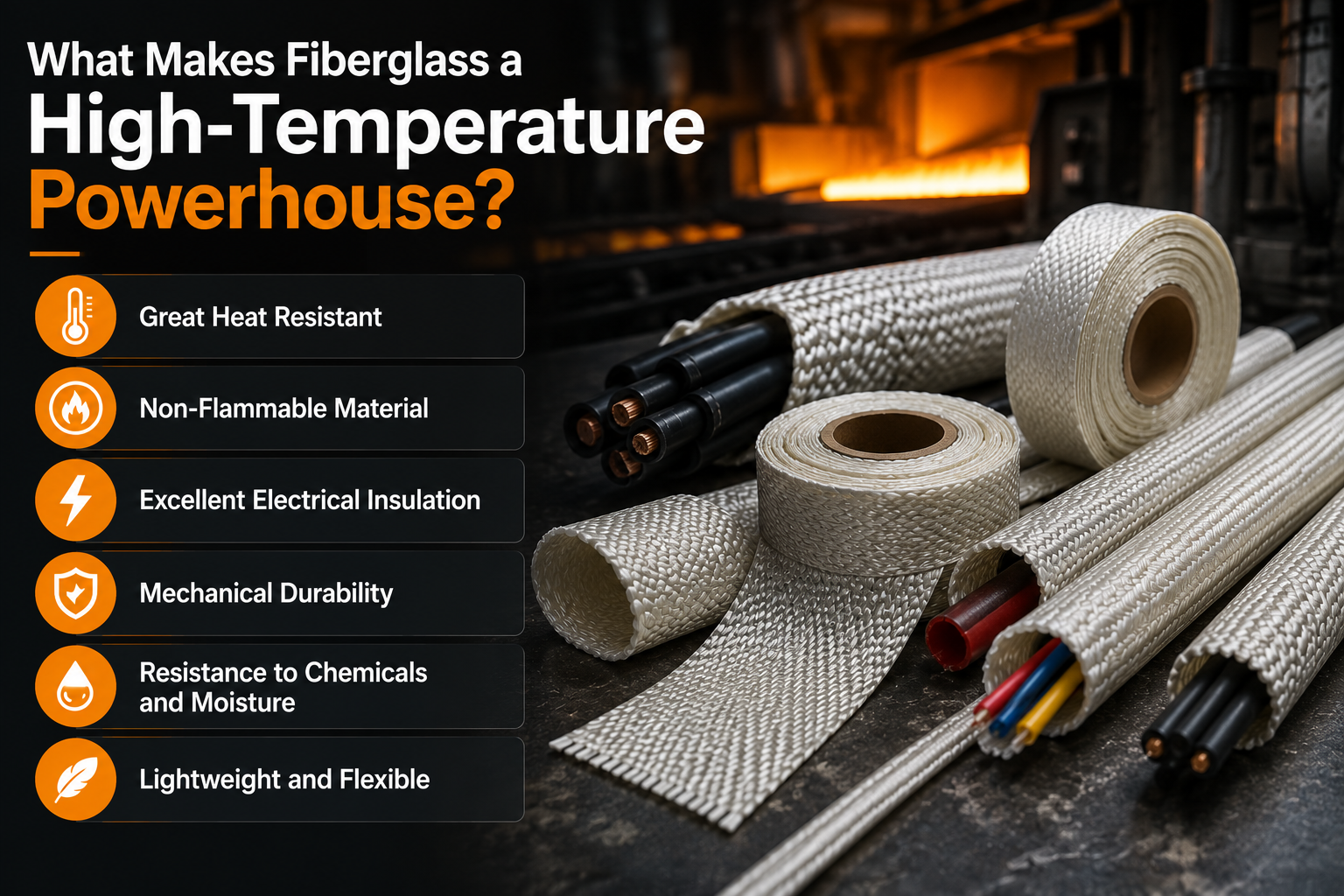
Fiberglass is made through the drawing out of glass that has been melted to become fluid into fine strands that can then be woven and braided to make strong and flexible materials. There are certain unique characteristics possessed by fiberglass:
1. Great Heat Resistant
Fiberglass is heat resistant and can withstand temperatures of between 300°c and more than 600°c depending on the particular fiberglass. This material can therefore withstand temperatures in which other materials like plastic, rubber, and cloth will have melted.
2. Non-Flammable Material
There are certain materials that are non-flammable, and fiberglass is one of those materials. In fact, this kind of material is flame retardant, and this is quite important especially when there are high temperatures and sparks like in industries, electric panels, and cars.
3. Excellent Electrical Insulation
As a result of its non-conductive properties, fiberglass turns out to be a great option for protecting wires and cables from any electric short circuits, particularly in instances where there are high temperature levels.
4. Mechanical Durability
Aside from its high strength at higher temperatures, another great quality of fiberglass is that it is highly resistant to abrasion and tension, thus providing protection from any kind of mechanical damage, cuts, and vibrations.
5. Resistance to Chemicals and Moisture
The resistance of fiberglass to chemicals, oil, and moisture makes it suitable even in situations when contamination by other substances will shorten the life of the material.
6. Lightweight and Flexible
Although it is quite durable, fiberglass is light and flexible enough to produce sleeves, tapes, and cloths for covering wires and cables.
Common Applications of Fiberglass in High-Temperature Protection
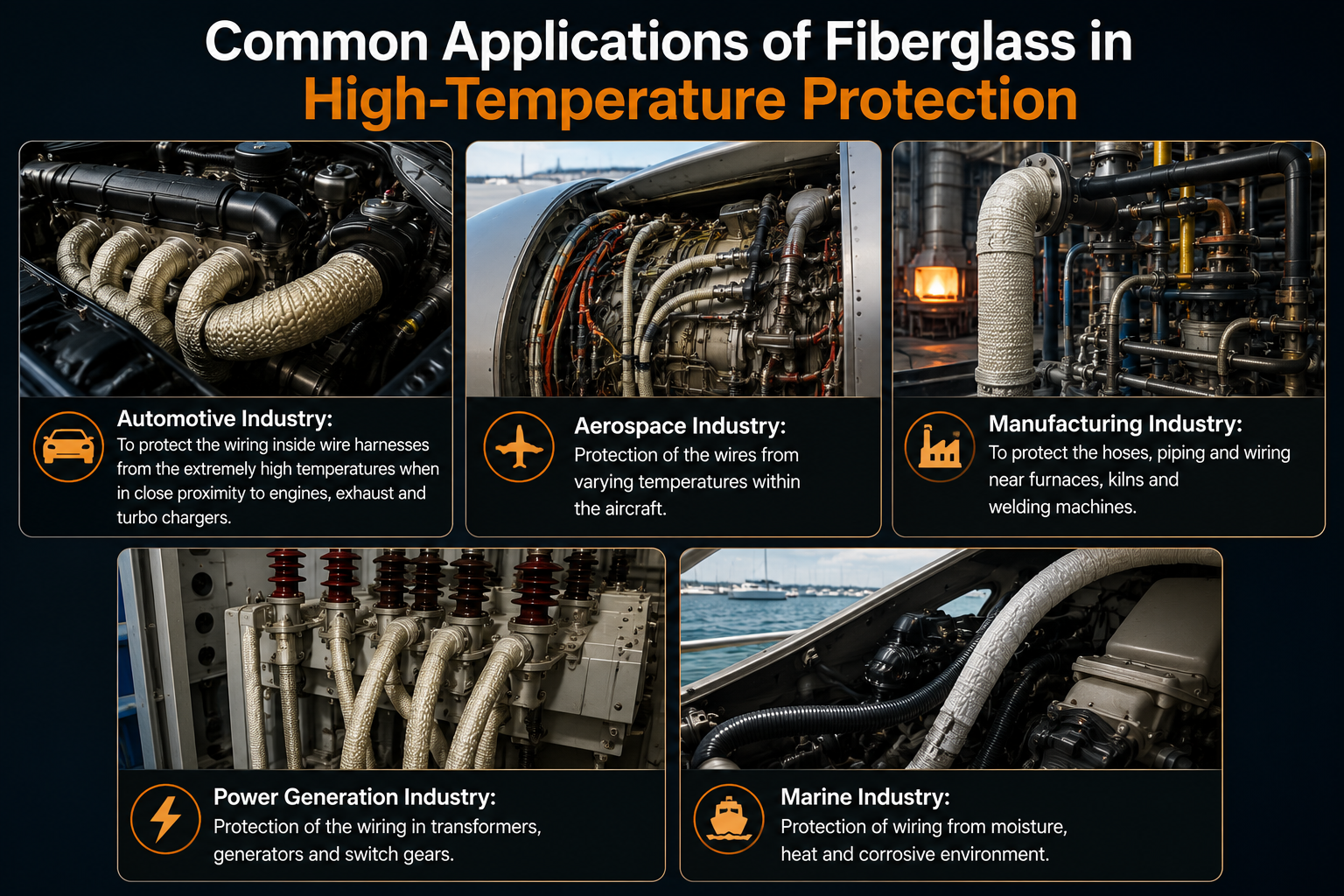
Fiberglass-based protection products are used across a wide range of industries, including:
- Automotive Industry: To protect the wiring inside wire harnesses from the extremely high temperatures when in close proximity to engines, exhaust and turbo chargers.
- Aerospace Industry: Protection of the wires from varying temperatures within the aircraft.
- Manufacturing Industry: To protect the hoses, piping and wiring near furnaces, kilns and welding machines.
- Power Generation Industry: Protection of the wiring in transformers, generators and switch gears.
- Marine Industry: Protection of wiring from moisture, heat and corrosive environment.
In nearly all these applications, two product categories consistently stand out for delivering fiberglass’s protective benefits: insulation sleeves and insulation tapes.
Fiberglass Insulation Sleeves: Flexible Protection for Wires and Cables
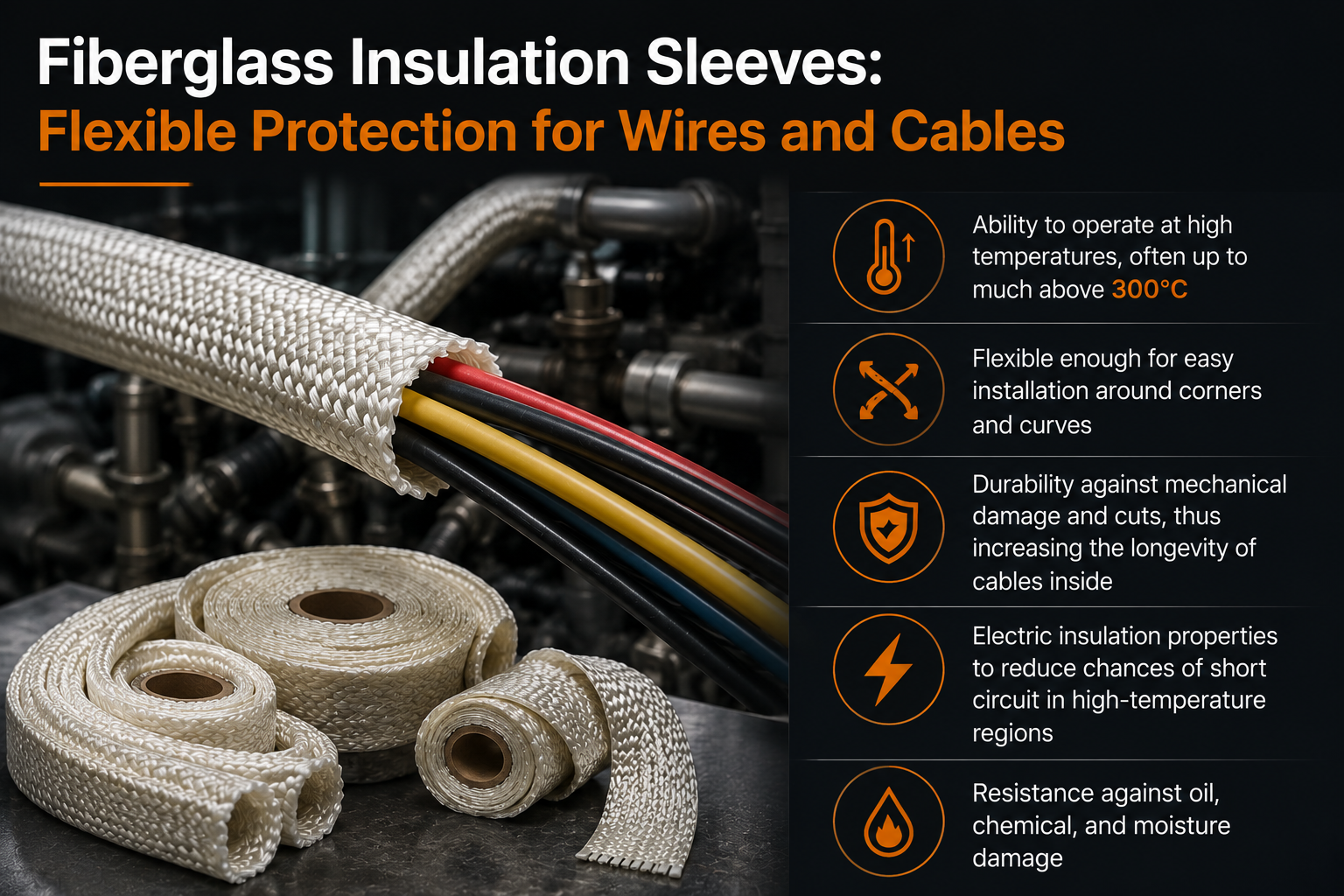
Fiberglass insulating Sleeves are braided or tubular materials that are made to fit over wires, cables, hoses and components in order to provide a layer of protection from heat, wear and electric shocks. The fiberglass insulating sleeves are especially useful when cables have to be fitted near any heat producing source.
Key benefits of fiberglass insulation sleeves include:
- Ability to operate at high temperatures, often up to much above 300°C
- Flexible enough for easy installation around corners and curves
- Durability against mechanical damage and cuts, thus increasing the longevity of cables inside
- Electric insulation properties to reduce chances of short circuit in high-temperature regions
- Resistance against oil, chemical, and moisture damage
Fiberglass sleeves have gained a lot of popularity in automotive and industrial retrofitting due to their ability to fit right over the wires and components in a cable system that requires extra heat protection.
Insulation Tapes for High Temperature: Versatile, Wrap-Around Protection
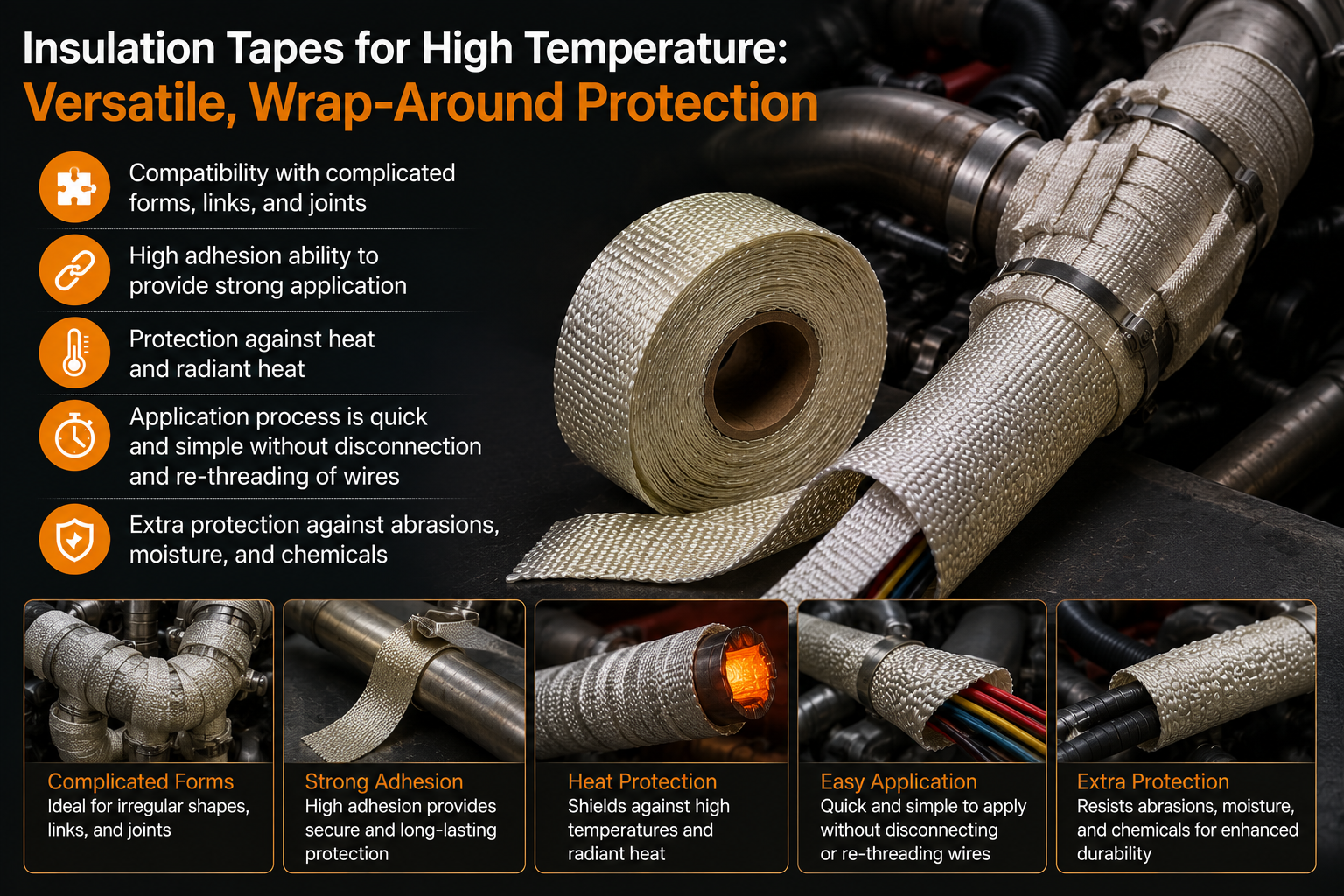
High temperature insulation tapes provide an alternative form of protection. As opposed to sleeves, which demand the sliding of cables into a sleeve, high temperature insulation tapes allow wrapping of wires, harnesses, pipes, and components of any shape and size, as opposed to sleeves which have limited shapes.
Benefits of high-temperature insulation tapes include:
- Compatibility with complicated forms, links, and joints
- High adhesion ability to provide strong application
- Protection against heat and radiant heat
- Application process is quick and simple without disconnection and re-threading of wires
- Extra protection against abrasions, moisture, and chemicals
High-temperature electrical tapes are often used to bundle wires, strengthen joints in fiberglass sleeves, and protect connections from high heat and stress concentration points.
Fiberglass vs. Other High-Temperature Materials
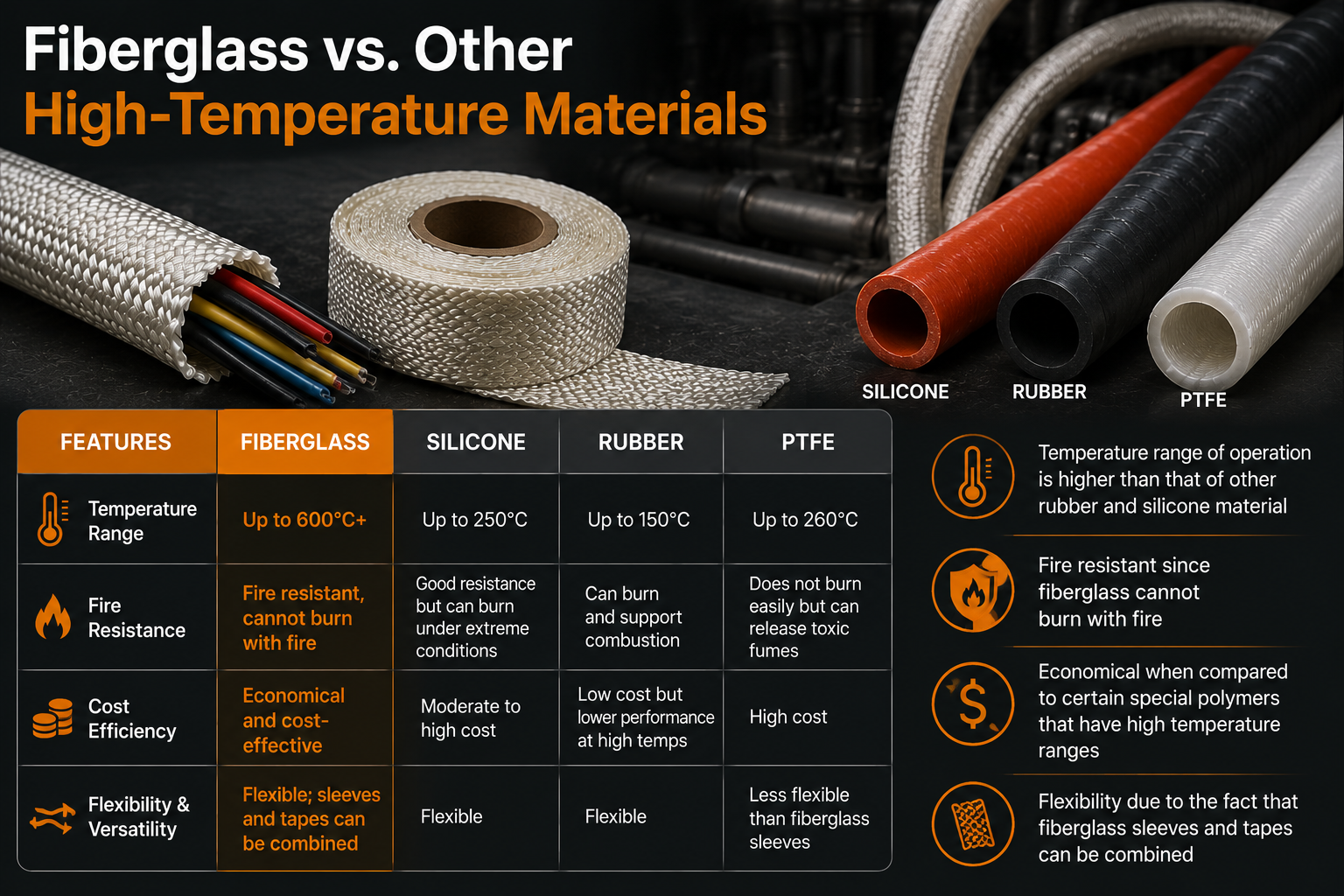
While materials like silicone, PTFE, and certain rubber compounds also offer heat resistance, fiberglass often outperforms them in several key areas:
- Temperature range of operation is higher than that of other rubber and silicone material
- Fire resistant since fiberglass cannot burn with fire
- Economical when compared to certain special polymers that have high temperature ranges
- Flexibility due to the fact that fiberglass sleeves and tapes can be combined
However, material selection must necessarily be based on the temperature, chemicals that the component is exposed to, and stress applied to it. In fact, in most cases, fiber glass sleeves and fiber glass tapes are used simultaneously – the sleeves protect against heat and friction while the tapes offer additional protection at the connections.
How to Choose the Right Fiberglass Product for Your Application
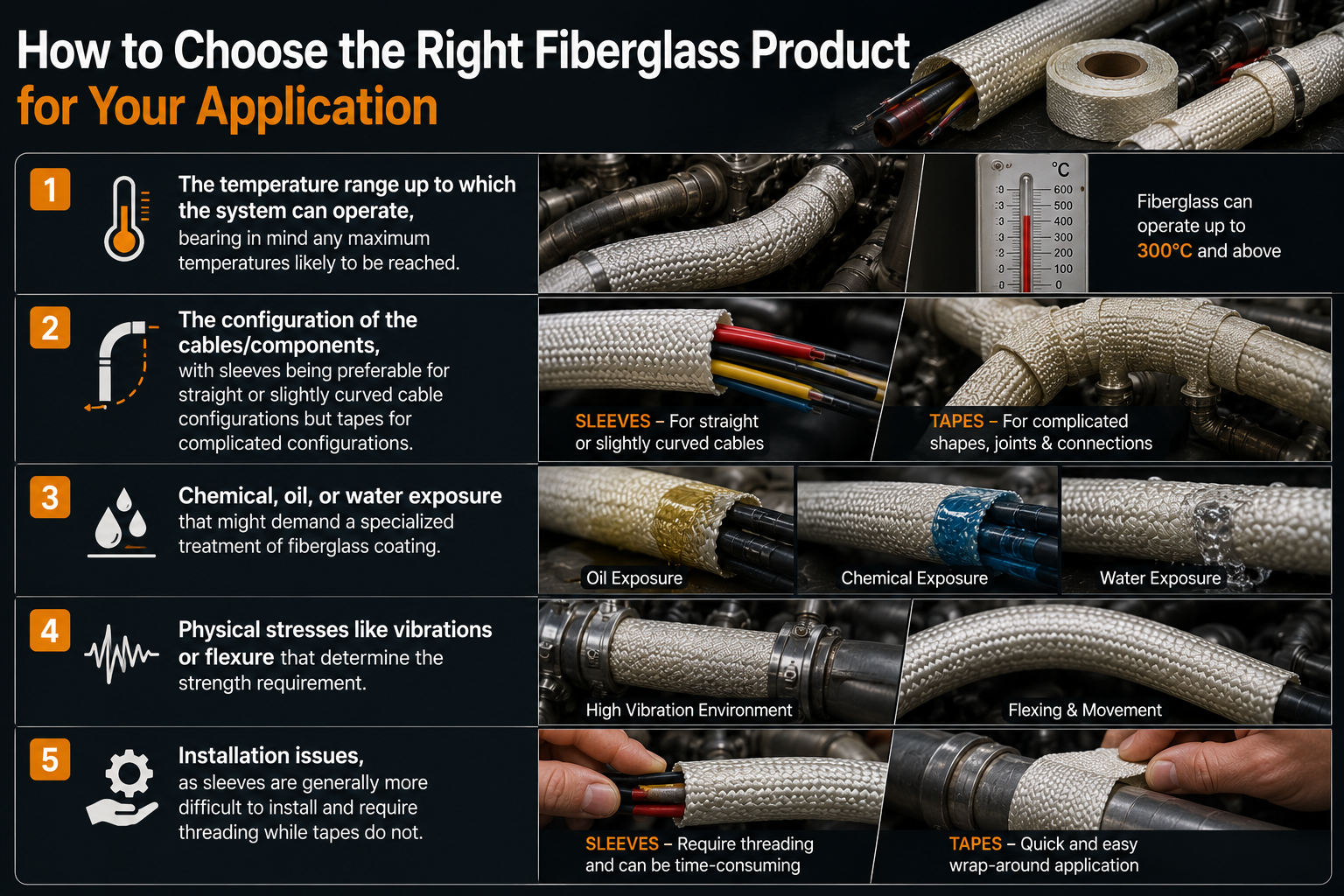
When selecting fiberglass insulation sleeves or high-temperature tapes, consider the following:
- The temperature range up to which the system can operate, bearing in mind any maximum temperatures likely to be reached.
- The configuration of the cables/components, with sleeves being preferable for straight or slightly curved cable configurations but tapes for complicated configurations.
- Chemical, oil, or water exposure that might demand a specialized treatment of fiberglass coating.
- Physical stresses like vibrations or flexure that determine the strength requirement.
- Installation issues, as sleeves are generally more difficult to install and require threading while tapes do not.
FAQ’S
1. What is the temperature of fiberglass insulation?
The fiberglass insulation materials such as sleeves and tapes have a continuous operating temperature of 300°C to over 600°C.
2. Is fiberglass insulation fireproof?
Fiberglass insulation material is fireproof since it is not flammable and cannot burn or catch fire; thus, it is safe compared to plastic or rubber insulation.
3. How do fiberglass insulation sleeves differ from tapes?
Fiberglass insulation sleeves are woven material that can be applied on the cables and components. The sleeves can be applied to either straight or slightly bent run. The tapes are wrap material that can be applied to complicated shapes such as joints and connections.
4. Can sleeves and tapes of fiberglass insulation be combined?
Certainly, it is common practice to combine sleeves with tapes to get good coverage on joints, connections and other areas where sleeves cannot be applied.
5. Can fiberglass insulation be used in automotive wiring?
Certainly, fiberglass sleeves and tapes are widely used for automotive wiring in proximity to engine parts, exhaust systems and turbochargers.
Related Post:
Ear Piercing Benefits for Male in Astrological
Sanding, Wax & Sealant: Key Steps to Perfecting Your Car’s Paint